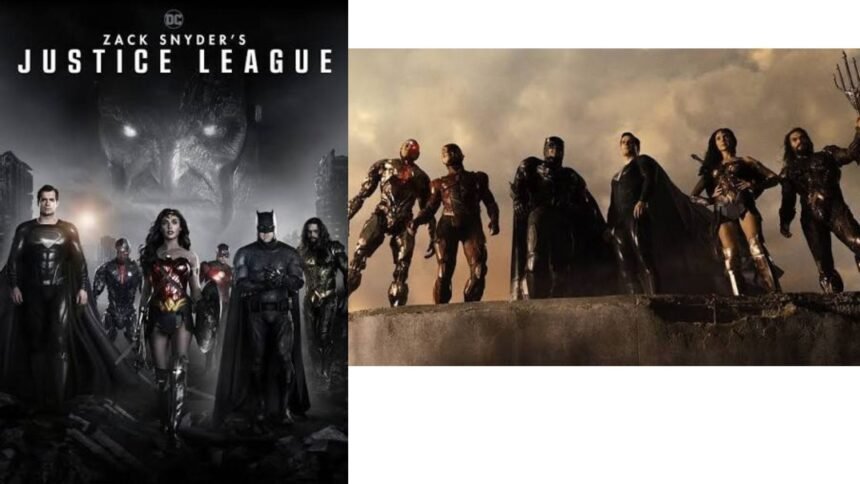
Zack Snyder Justice League is the 2021 director’s cut of the superhero film originally released in theaters in 2017. Running for 4 hours and 2 minutes, it significantly expands the story, character arcs, visual style, and mythology surrounding Batman, Superman, Wonder Woman, Aquaman, Cyborg, and The Flash.
For viewers searching for the “Snyder Cut,” the key distinction is simple: this is not a separate Justice League story unrelated to the 2017 movie. It is a substantially reworked version intended to present Snyder’s approach to the material, with additional footage, altered scenes, different pacing, and a much broader sense of the DC universe.
What Is Zack Snyder Justice League?
Zack Snyder Justice League arrived on March 18, 2021, after years of fan campaigning for Snyder’s version to be released. DC officially identifies Zack Snyder as director and lists Chris Terrio and Snyder among the writers, with Will Beall also credited. The principal cast includes Ben Affleck, Henry Cavill, Gal Gadot, Jason Momoa, Ezra Miller, and Ray Fisher.
The project became known as the “Snyder Cut” because Snyder had originally been the director of the 2017 Justice League before leaving the production during post-production. Joss Whedon subsequently completed the theatrical version.
The 2021 release gave Snyder considerably more room to develop the characters and story. It also uses a 1.33:1 aspect ratio, creating a taller frame than the widescreen presentation audiences generally expect from modern superhero movies.
Zack Snyder Justice League Story Explained
The story begins after Superman’s death, with Bruce Wayne trying to respond to a growing extraterrestrial threat. Batman and Wonder Woman work to recruit a group of metahumans capable of defending Earth.
Their team eventually includes Aquaman, Cyborg, and The Flash. Superman’s absence remains central to the narrative, while Steppenwolf becomes the immediate antagonist attempting to conquer Earth using the powerful Mother Boxes.
The film also introduces a larger mythology involving Darkseid and DeSaad. These elements give the conflict a wider historical and cosmic dimension than the theatrical release.
A major part of the film concerns Cyborg. Victor Stone receives substantially more narrative attention, allowing the audience to understand his relationship with his father, Silas Stone, his transformation, and his struggle with his new abilities. This expanded character material is one of the clearest structural differences between the two versions. Contemporary reviews also frequently highlighted the additional character development, particularly for Cyborg.
The Knightmare Future
One of the most discussed additions is the Knightmare sequence involving Batman and a devastated future. It connects with the vision previously introduced in Batman v Superman: Dawn of Justice and suggests what could happen if the heroes fail to stop the coming threat.
The sequence also features Jared Leto’s Joker, giving audiences a brief but significant interaction between Batman and the Clown Prince of Crime. The Knightmare material was heavily promoted before release and became an important part of the film’s mythology.
Zack Snyder Justice League vs. Justice League 2017
The differences go beyond adding deleted scenes. Snyder’s cut changes how several characters are introduced, how the villains are presented, and how the overall story is structured.
| Feature | 2017 Justice League | 2021 Zack Snyder Cut |
|---|---|---|
| Runtime | About 2 hours | 4 hours 2 minutes |
| Aspect ratio | Widescreen theatrical format | 1.33:1 |
| Cyborg | Smaller role | Major character arc |
| Steppenwolf | Different design and presentation | Redesigned and more developed |
| Darkseid | Absent | Major mythology element |
| Knightmare | Not included in the same form | Expanded sequence |
| Rating | PG-13 | R |
| Structure | Theatrical feature | Four-chapter-style presentation |
The runtime is arguably the most obvious difference. At more than four hours, the 2021 version has enough space to establish backstories, relationships, mythology, and subplots that were compressed or removed from the theatrical cut. DC and Rotten Tomatoes both list the film at 4 hours and 2 minutes with an R rating.
💡 Pro Tip: If you are watching the Snyder Cut for the first time, avoid treating it like a conventional two-hour superhero movie. Its chapter-based structure makes more sense if you approach it as a long-form ensemble story rather than expecting constant action.
Cast and Characters
The central team remains familiar, but their individual journeys receive more attention.
- Ben Affleck as Batman: Bruce Wayne takes responsibility for assembling the team after Superman’s death.
- Gal Gadot as Wonder Woman: Diana provides knowledge about the ancient threat and helps unite the heroes.
- Henry Cavill as Superman: His death and eventual return shape much of the story.
- Jason Momoa as Aquaman: Arthur Curry is introduced as a reluctant hero with connections to Atlantis.
- Ezra Miller as The Flash: Barry Allen receives additional material involving his father and his understanding of his abilities.
- Ray Fisher as Cyborg: Victor becomes one of the emotional centers of the film.
- Ciarán Hinds as Steppenwolf: The primary physical antagonist receives a revised backstory and visual design.
- Ray Porter as Darkseid: The cosmic villain represents a much larger threat beyond Steppenwolf.
DC’s official cast information also lists Amy Adams, Jeremy Irons, Diane Lane, Connie Nielsen, J.K. Simmons, Amber Heard, Joe Morton, and other supporting performers.
Why the Snyder Cut Became Significant
The release was unusual because audience demand played a visible role in bringing an unreleased director’s version of a major studio superhero movie to the public. The #ReleaseTheSnyderCut campaign developed after the 2017 theatrical release and continued for several years before WarnerMedia announced the 2021 release.
The critical response was also notably different from that of the 2017 theatrical film. Rotten Tomatoes currently lists the 2021 film at 71% from critics and 92% from its audience rating, while its database lists the 2017 Justice League at 39% from critics. Those figures reflect the site’s current ratings and should not be treated as a universal measure of quality.
The important point is that reception remains subjective. Some reviewers praised the additional character development and clearer storytelling, while others criticized the four-hour length, pacing, and visual excess.
Is Zack Snyder Justice League Worth Watching?
For viewers interested in DC films, the Snyder Cut offers considerably more context than the theatrical version. It gives Cyborg a larger emotional storyline, provides more information about Steppenwolf and Darkseid, expands The Flash and Batman, and presents a more complete version of Snyder’s intended visual approach.
The biggest consideration is time. Four hours is a substantial commitment, and the slower pacing will not suit every viewer. Those primarily interested in seeing how the 2017 movie differs from Snyder’s version will find plenty of meaningful changes, while newcomers may benefit from some familiarity with Man of Steel and Batman v Superman: Dawn of Justice.
📌 Key Takeaway: Zack Snyder Justice League is best understood as an expanded director’s cut that substantially reworks the 2017 film rather than simply adding a few deleted scenes. Its greatest differences involve character development, villain mythology, structure, runtime, and Snyder’s visual presentation.
Frequently Asked Questions
Is Zack Snyder Justice League the same as the 2017 movie?
It tells broadly the same central story but is a substantially different cut. The 2021 version contains additional footage, different editing, expanded character arcs, revised villain material, new sequences, and a different visual presentation. Its 4-hour-2-minute runtime gives it much more room to develop the ensemble.
How long is the Snyder Cut?
The film runs for 4 hours and 2 minutes. That makes it more than twice the length of the approximately two-hour theatrical version. The extended runtime allows the story to spend significantly more time on Cyborg, The Flash, Batman, Steppenwolf, and the wider mythology.
Who is the main villain in Zack Snyder Justice League?
Steppenwolf serves as the principal immediate antagonist, while Darkseid represents the larger cosmic threat behind the film’s mythology. DeSaad also appears as part of the New Gods material. Their expanded roles help establish a broader conflict than the theatrical movie presented.
Is the Snyder Cut rated R?
Yes. Rotten Tomatoes lists the film as rated R for violence and some language. This differs from the PG-13 theatrical release and reflects the darker presentation of the 2021 cut.
Does the movie set up a sequel?
It introduces several ideas that could have supported future stories, including Darkseid’s larger threat, the Knightmare future, and potential conflicts involving Batman and Joker. However, those ideas should be viewed as elements of Snyder’s planned storyline rather than confirmation that those sequels were produced.
Zack Snyder Justice League remains a distinctive example of an alternate director’s cut becoming a major release in its own right. Its expanded characters, longer structure, and additional DC mythology make it a substantially different viewing experience from the 2017 theatrical film.